


A New
Chapter for a Historic Building

For the new KULTE contemporary art center in Rabat, Aït Manos designed and donated a monumental zellige floor. Inspired by a stone rosette preserved in the historic building, the composition was developed by Tawfik Bennani in close dialogue with architect Aziza Chaouni.
On Rue des
Consuls, at the edge of Rabat’s medina overlooking the Bouregreg River, a
former British consulate dating back to 1779 has found a new purpose.
Carefully
restored by architect and engineer Aziza Chaouni, the building is now home to
KULTE – Center for Contemporary Art & Editions, founded by Yasmina Naji in
2013. Inaugurated on November 13, 2026, it marks a significant milestone for
Rabat's contemporary art scene.
The
restoration was guided by a close reading of the building's history. Aziza
Chaouni conducted extensive research, including in British archives, to
understand its original architecture and preserve its understated character.
Among the
few surviving ornamental details was a rosette carved into stone. This modest
fragment would become the starting point for one of the project's most
distinctive architectural features.

The
Story Behind the Rosette
When Aziza
Chaouni approached Aït Manos, the idea was to reinterpret the historic rosette
across the patio floor.
Tawfik
Bennani, co-founder of Aït Manos, developed the geometric composition in close
dialogue with the architect. Their exchanges brought together her understanding
of the building and his knowledge of zellige, its proportions, geometry and
material possibilities.
The
original stone ornament was redrawn at a monumental scale, extending across the
patio in a composition that can only be fully appreciated from the upper
floors.
Achieving
this required considerable precision. The patio itself is asymmetrical, leaving
little room for adjustment. Every element had to be carefully positioned for
the geometry to come together.

Rather than
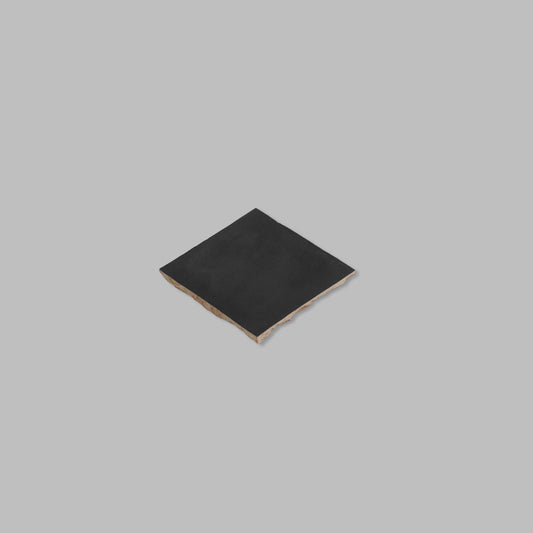
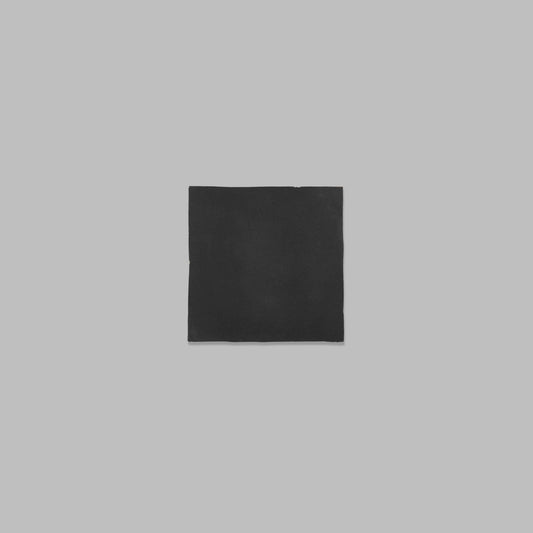
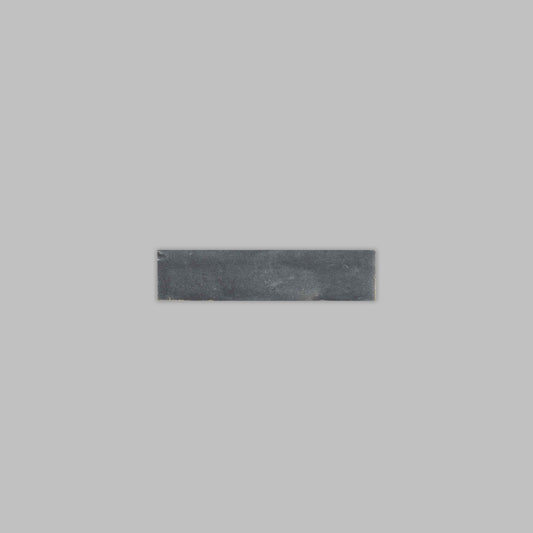
relying on strong contrasts, Tawfik chose a restrained palette of five closely
related shades: Royal Cream, Terracotta, Lava, White and White Carrare.
Two
formats, a FIELD 10 × 10 cm and OUIRGANE 5 × 20 cm were used to
construct the design. From ground level, the subtle variations in color almost
merge. Seen from above, the entire rosette comes into focus.

Made by
Hand, Designed for the Space
The zellige
was produced in Aït Manos' Casablanca workshops, where each piece was hand-cut
and hand-glazed by the Maison's Maâllems using clay from Fez.
The
complexity of the project lies in the precision of its composition. Working
with only two formats and five neighboring shades, the teams had to translate a
large-scale geometric drawing into individual pieces while respecting the
irregular dimensions of the patio.
The
resulting surface changes with the light throughout the day. Its slight
variations in tone and texture bring depth to a composition that remains
deliberately understated.
Beyond the
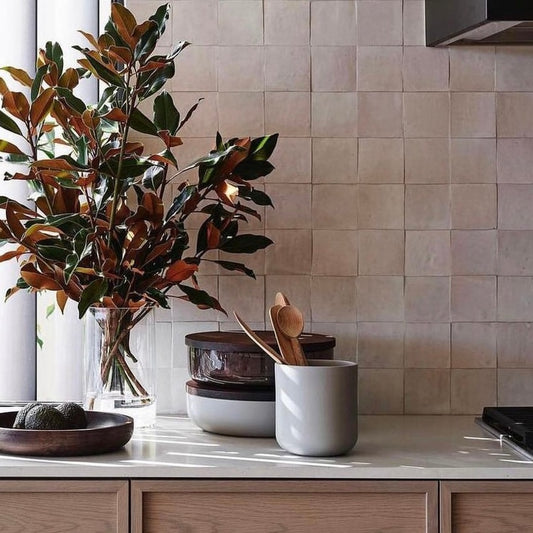
patio, Aït Manos also created the zellige counter for KULTE's library,
extending the presence of the material into another space dedicated to exchange
and discovery.


Supporting
a New Cultural Landmark
Aït Manos'
involvement in KULTE goes beyond the design and production of zellige.
The Maison
donated the zellige for the project as part of its commitment to supporting
cultural initiatives in Morocco.
For Ghalia
Sebti, co-founder of Aït Manos, the decision was driven first by the people
behind KULTE and their determination to bring the project to life.
“What convinced us was the journey of two remarkable women” explains Ghalia Sebti, co-founder of Aït Manos. “Yasmina Naji, who has been developing KULTE for over a decade, establishing it as Rabat’s first contemporary art center, and Aziza Chaouni, an architect and engineer whose commitment to architectural heritage has earned her the leadership of a research laboratory at EPFL, the Swiss Federal Institute of Technology in Lausanne. Supporting this project meant becoming part of their collective endeavor.”
The
restoration itself was made possible through shared contributions and personal
commitments, with Aziza Chaouni undertaking her architectural work on a
voluntary basis.
For Aït
Manos, contributing to KULTE was an opportunity to support a place where
artistic creation, architecture and public life could meet.
It also
reflects the Maison's belief that zellige belongs as much in contemporary
spaces as in the buildings that have carried its history for centuries.


A Place
for Art, Open to the City
KULTE
brings together exhibition spaces, a bookshop, a library, a graphic design
studio and a café, creating a place for artists, visitors and the wider public.
At its
center, the patio offers a flexible gathering space. The landscape design by
PAN Landscape includes movable plants, allowing the courtyard to accommodate
different uses while contributing to its passive cooling.
Here, the
zellige is part of everyday life. Visitors cross the rosette without
necessarily seeing its complete form. Only when they move upstairs does the
drawing reveal itself.
KULTE
opened on November 13, 2026, with Ghorfa-Jabal-Kawn, an exhibition by
artist Younès Rahmoun.
For Aït
Manos, the project carries a particular significance: a historic ornament has
been given a new scale, a centuries-old material has found its place in a
contemporary art center, and a collective commitment has helped bring an
important cultural space to life.
Watch
the full interview:
Project
Credits
KULTE – Center for Contemporary Art & Editions, Rabat
Founded by Yasmina Naji
Architecture: Aziza Chaouni Projects
Landscape: PAN Landscape
Patio zellige floor and library counter: Aït Manos
Geometric design: Aziza Chaouni & Tawfik Bennani
Photography: Alessio Mei / Mr Big Stuff Studio